Why Screen?
Why screen
nucleic acids?
Synthesis screening meets regulatory requirements, aligns with global best practices, and prevents misuse.

Why Screen?
Synthesis screening meets regulatory requirements, aligns with global best practices, and prevents misuse.
Synthesis screening is recommended by national-level guidance in multiple countries, by synthesis-industry leaders, top AI developers, ISO standards, and the WHO. Providers screen to meet evolving regulatory requirements, align with best practices, and reduce the risk of misuse.
Regulation
Screening has long been necessary to comply with export controls in over 50 countries. Since 2023, national-level screening guidance has been introduced in multiple countries.
The regulatory landscape
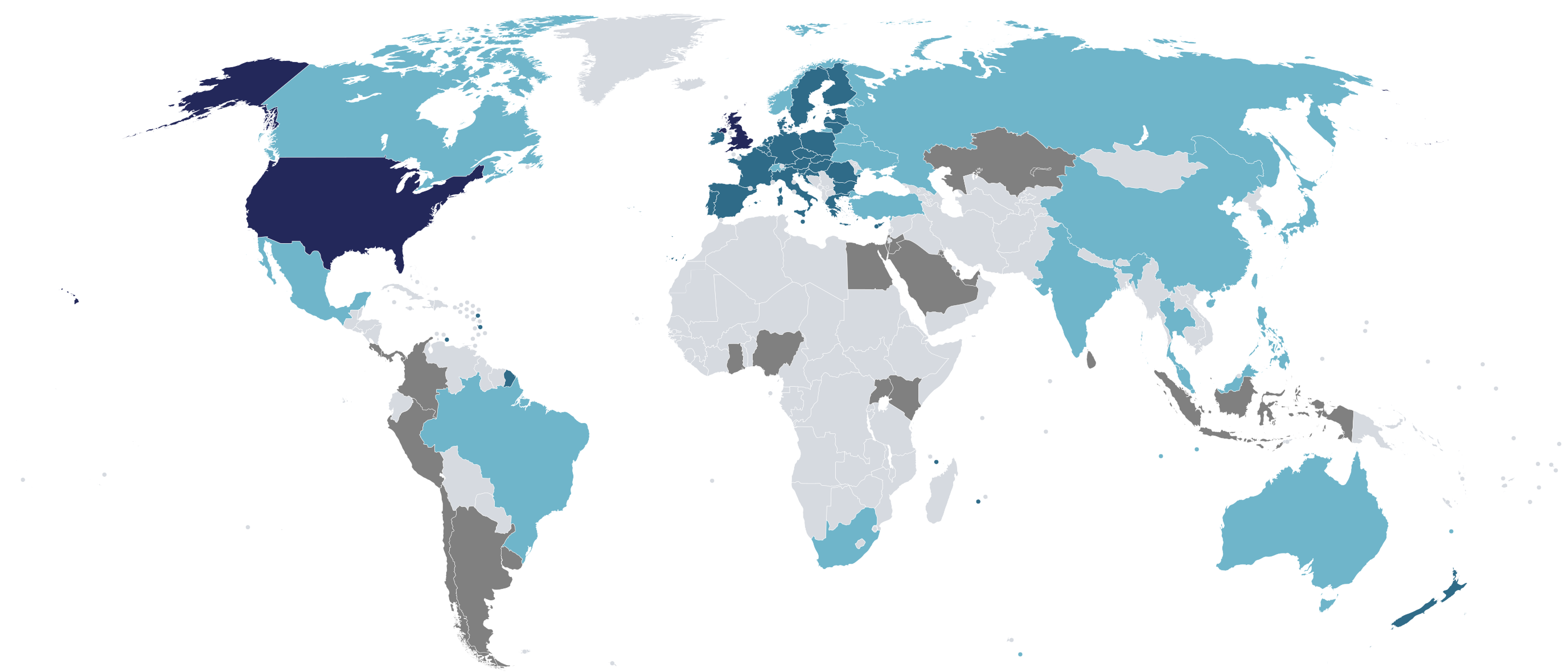
What Commec covers
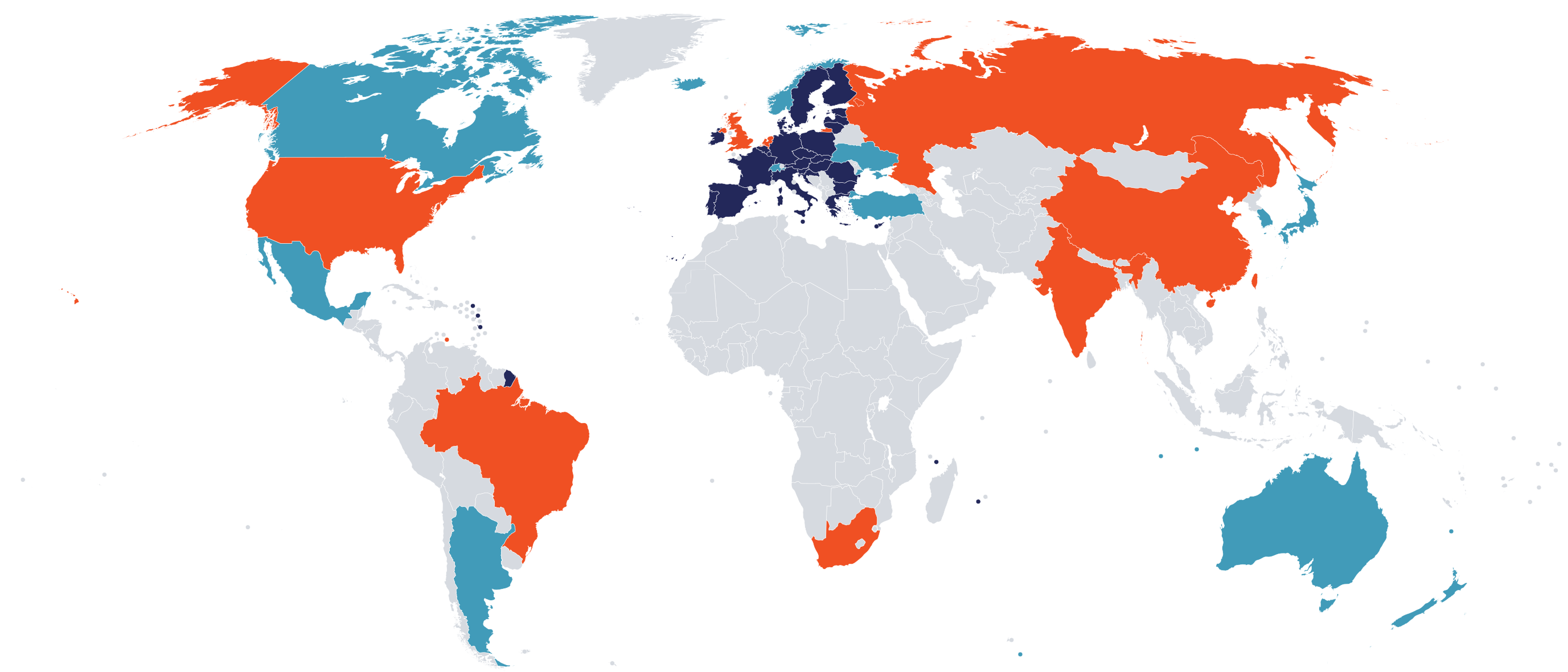
Don't see your country covered? Request a new list
The designations employed and the presentation of material on these maps do not imply the expression of any opinion on the part of IBBIS concerning the legal status of any country, territory, or area, or the delimitation of its frontiers or boundaries. Regulatory status is drawn from the IBBIS Global Synthesis Map.
Decades in the making
For nearly 20 years, industry leaders have agreed that some sequences like those capable of reconstructing pathogen genomes should only go to trusted customers, a standard now backed by the WHO, OECD, and ISO.

Over 35 members, including leading synthesis companies in China, the EU, and the USA. Since 2009, all IGSC members screened orders through a Harmonized Screening Protocol.
Over 40 members, including Biomemory, Huawei, and IBM. Its 2025 position paper on biosecurity highlights trusted synthesis methods that ensure no sequence of concern is sent to data-storage customers.

The international standard for the production and quality control of synthesized gene fragments, genes, and genomes specifies that producers should screen sequences against recognized databases of pathogen and toxin DNA and sets out clear procedures for handling flagged orders.

Features a case study in which a synthesis provider fails to adequately screen, enabling the creation of a chimeric poxvirus with pandemic potential. The guidance concludes this situation could have been prevented by screening the sequences and the customer.
IBBIS, the host organization of the Common Mechanism, has active standards-development work with the DNA Screening Standards Consortium and the Sequence Biosecurity Risk Consortium.
Proven vulnerability
Screening isn't just about regulatory compliance: it's about avoiding reputational damage, loss of trust among customers and partners, and, most importantly, real-world harm.
Journalists have sounded the alarm about dangerous sequences ordered in the mail under false identities, and risky materials still surface in the wrong places.
A Guardian reporter ordered a fragment of smallpox DNA by post, and “all it took was an invented company name, a mobile phone number, a free email address and a house in north London”, prompting calls for regulation and helping to launch the IGSC.
Read the investigation →US authorities discovered illicit home labs in Reedley, California (2023) and Las Vegas (2026), housing samples labeled as pathogens including Ebola, a reminder that dangerous material still turns up in the wrong hands.
Read the report →
“Laws take years to get into place. Instagram goes in not even days, minutes, and that can crash not just an individual business, but the entire bioeconomy.”
Adam Clore · Integrated DNA Technologies (IDT)
On why transparent media reporting is a stronger incentive for sequence security than fines or penalties, speaking at an iGEM Responsibility workshop hosted by IBBIS. Learn more →
As AI makes it easier to design sequences, screening has emerged as a key safeguard. A 2026 report states synthetic DNA is “the highest-leverage chokepoint in the biological threat chain”.
The leaders of top AI labs, including OpenAI, Google DeepMind, Anthropic, Microsoft AI, and Meta, joined Nobel laureates, industry leaders, and national-security officials in an open letter calling for mandatory nucleic acid synthesis screening.
The report's section on biological and chemical risks notes that “using synthetic DNA is likely the most straightforward way to create modified pathogens” and highlights synthesis screening as a key focus for technical AI safety mitigations.
Synthesis screening also features in the Frontier Model Forum's July 2025 Taxonomy of AI–Bio Mitigations, is required under CEPI's Biosecurity Policy, and forms a core part of the 2024 Commitments for the Responsible Development of AI for Protein Design.
Free advising and implementation support from our technical team.